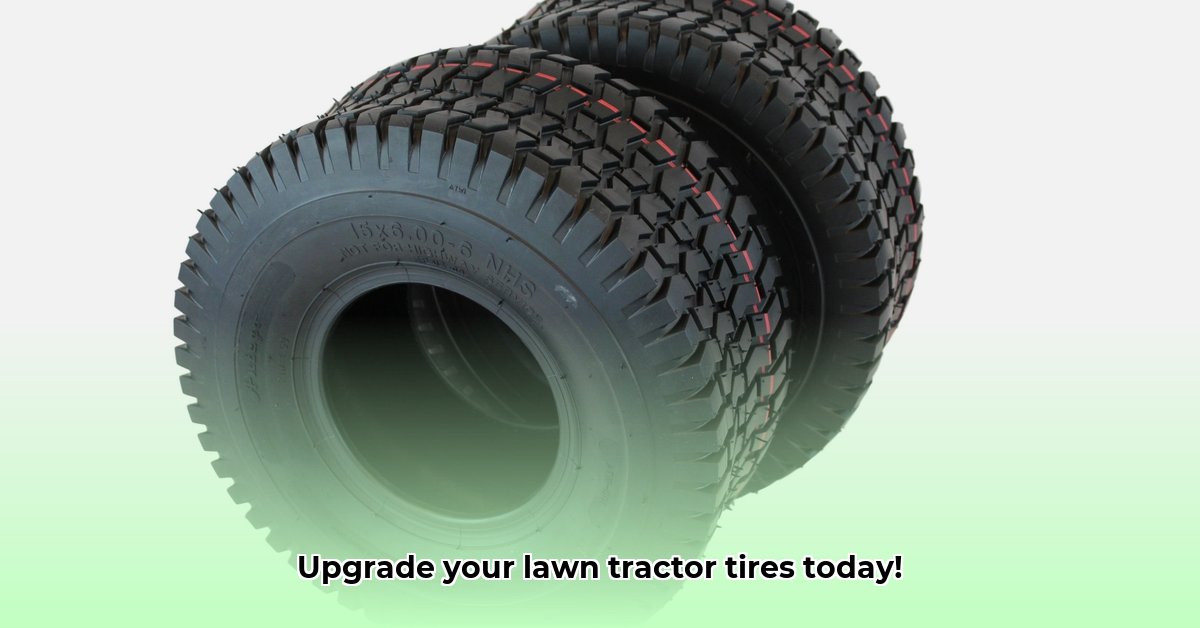
Understanding 15x6.00-6NHS Lawn Tractor Tires
Choosing the right tires for your lawn tractor is crucial for performance, longevity, and a smooth mowing experience. This buyer's guide focuses on the 15x6.00-6NHS tire size, common on many riding mowers and lawn tractors. Understanding the specifications and factors involved will help you make an informed decision and avoid costly mistakes. Let's get started! For more information on riding lawn mowers, check out this helpful resource: Riding Lawn Mowers.
Decoding the Tire Size: 15x6.00-6NHS
The numbers in "15x6.00-6NHS" provide essential information about the tire's dimensions and construction:
- 15: Rim diameter (in inches). This is the diameter of the wheel the tire fits on.
- 6: Section width (in inches). This is the width of the tire's tread.
- .00: Aspect ratio. This value (0 in this case) indicates a low-profile tire, meaning its height is relatively low compared to its width. This results in a more stable ride and better handling.
- 6: Rim diameter (in inches – repeated for clarification). Ensures compatibility with the 15-inch rim.
- NHS: This is a manufacturer's designation. While the exact meaning can vary slightly by manufacturer, it generally signifies a tire construction designed for heavier loads and increased durability, making it suitable for lawn tractors.
Key Factors to Consider When Buying 15x6.00-6NHS Tires
Several factors impact tire performance and lifespan. Choosing the right tires involves balancing these elements to meet your specific needs and budget:
Durability: Built to Withstand the Test of Time
Durability is paramount. Consider tires with reinforced sidewalls and puncture-resistant materials. A higher ply rating generally indicates a stronger, more durable tire. Aren't puncture-resistant tires worth the added cost if they prevent costly repairs or replacements?
Traction: Maintaining Grip in Various Conditions
Adequate traction is essential, particularly on slopes or damp grass. Look for tires with tread patterns suitable for your lawn conditions. Deep, aggressive treads excel on uneven terrain, while shallower treads are gentler on manicured lawns. Which type of tread best suits your lawn's typical condition?
Load Capacity: Ensuring Safe Operation
The tire's load capacity must exceed your lawn tractor's weight for safe operation. Consult your tractor's manual to determine the correct load rating. Overloading tires can lead to premature wear, damage, and even potential failure. Isn't knowing your lawn tractor's weight essential for safe tire selection?
Rolling Resistance: Improving Fuel Efficiency
Lower rolling resistance means your tractor's engine uses less power to move the tires, leading to improved fuel efficiency. This is particularly advantageous for larger tractors or frequent use. Wouldn't improved fuel efficiency be a worthwhile benefit?
Price: Balancing Quality and Cost
While the least expensive option may be tempting, remember that quality tires offer increased longevity and better performance. Invest in tires that balance your budget with your requirements for long-term value. Do you prioritize immediate cost savings over long-term performance and durability?
Tire Types and Materials: A Closer Look
Different tire types are tailored to various lawn conditions:
- Turf Tires: Designed for manicured lawns, minimizing ground disturbance and ensuring a smooth cut.
- All-Terrain Tires: Offer a balance between traction and turf protection, suitable for a variety of lawn conditions.
- Lug Tires: Built for rough terrain; these tires provide excellent traction but may cause more damage to delicate lawns.
Tire materials also significantly impact performance and lifespan. The rubber compound and ply rating (number of fabric layers) directly affect durability and load handling. Higher ply ratings typically correlate with increased strength and load capacity.
Maintenance: Extending Tire Lifespan
Proper maintenance prolongs tire life and ensures safe operation:
- Regular Inflation Checks: Maintain the recommended tire pressure (found on the sidewall) using a reliable gauge. Underinflation accelerates wear, while overinflation can cause damage.
- Regular Inspections: Regularly inspect tires for cuts, embedded objects, or unusual wear patterns. Address any problems immediately.
- Proper Storage: When not in use, store tires in a cool, dry place, inflated to the recommended pressure, away from direct sunlight.
Conclusion: Making the Right Choice
Selecting the right 15x6.00-6NHS lawn tractor tires involves considering durability, traction, load capacity, rolling resistance, and price. Taking the time to understand these factors ensures a smooth, efficient mowing experience and protects your investment. By following the guidance in this buyer's guide, you can confidently select the ideal tires for your needs. Remember to consult your lawn tractor's manual for specific recommendations.